This guide walks through the complete removal process: inspection and sorting at the dock, preparation for pickup, choosing the right disposal pathway, and the mistakes that turn recoverable assets into landfill costs.
Key Takeaways
- Sort at the dock — not the baler. That's the only point where boxes still have resale value.
- The value hierarchy is: reuse > resell > recycle > dispose. Each step down recovers less.
- Clean, dry corrugated recycles as OCC (ISRI Grade 11); wax-coated, wet, or contaminated boxes go to landfill.
- Most professional pickup services require a minimum of 50–100 boxes before scheduling.
- Palletizing and banding before pickup is required — most services will reject loads that aren't properly prepared.
How to Remove Gaylord Boxes: Step by Step
Step 1: Inspect and Sort at the Dock
This is the most valuable step, and most operations skip it. By the time boxes reach the baler, any resale value has already been lost.
As each Gaylord empties, run a quick four-point check:
- Walls — Press the sides firmly. Spongy or delaminated walls indicate moisture damage. Research from ASTM confirms that moisture content directly degrades corrugated compression strength, so a wall that feels soft has already lost structural integrity.
- Corners — Crushed or rounded corners cannot support stacking loads. Square, sharp corners are the baseline for reuse.
- Bottom flaps — Torn, missing, or folded-under flaps disqualify a box from reuse and reduce resale grade.
- Cleanliness and odor — Any moisture, odor, or visible contamination routes the box to disposal, not recycling.
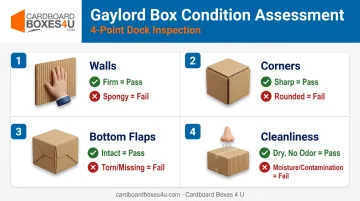
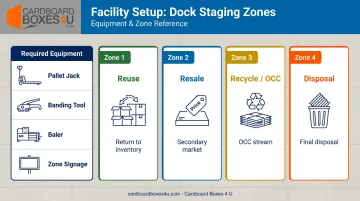
Assign each box immediately to one of four categories: reuse stock, resale staging, OCC recycling, or disposal. Don't let categories mix.
A single wax-coated or wet box baled into a clean OCC load can cause the entire bale to be downgraded or rejected by a mill. WestRock's OCC specifications cap prohibitive materials at just 1% of bale weight before penalties apply.
Step 2: Prepare Boxes for Removal
Preparation determines what you'll be paid and whether a service will accept the load at all.
For reuse or resale:
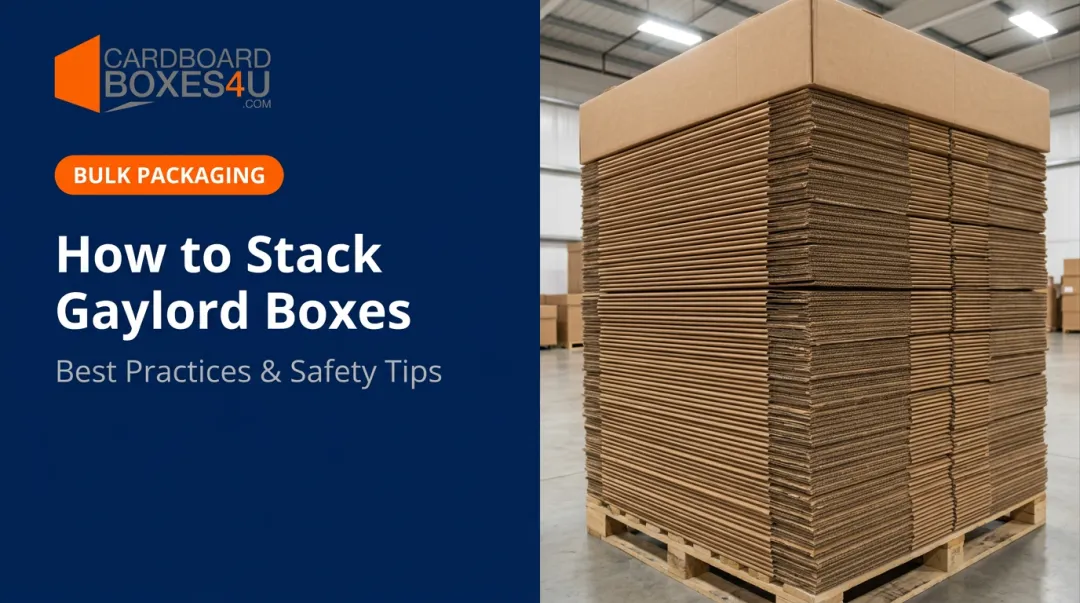
- Stack upright on wooden pallets in groups of 25–50
- Band each stack to keep boxes stable and square
- Note any single-use (1x) boxes separately — they command higher resale prices on used-box marketplaces
For OCC recycling:
- Flatten fully and remove poly liners and tape
- Bale with standard OCC corrugated
- Confirm your facility's acceptance criteria before mixing heavy-grade Gaylord board with standard corrugated — some mills want materials separated by grade
For disposal:
- Segregate wet, waxed, or contaminated boxes clearly
- Route to dumpster, waste-to-energy program, or a hazardous-material handler if chemical contamination is involved
- Never let disposal-grade material enter the recycling stream
Step 3: Document and Photograph Before Pickup
Most recycling and resale services require photos before scheduling. Poor documentation routinely triggers payment disputes.
Capture:
- Group shots of palletized stacks (establishes quantity)
- Close-ups of wall fluting to indicate board grade (200#/ECT-32 single-wall vs. 275#/ECT-48 double-wall vs. 1100#/ECT-90 triple-wall)
- Upright standing shots showing shape integrity
- Interior photos of bottom flaps
Make sure images are well-lit with no shadows obscuring condition. If you can identify the box specifications, note them separately. Heavier-grade boxes command higher per-unit prices on resale marketplaces, and that detail speeds up quoting.
Step 4: Arrange Pickup or Drop-Off
Contact recycling services, used-container brokers, or marketplace buyers based on your box grade:
- Grade A/B boxes: Used-box buyers, regional brokers, or platforms like The Gaylord Box Exchange — minimum 50 boxes, pickup in 2–7 business days for larger loads, 7–10 business days for smaller quantities
- OCC-grade material: Local recycling haulers or commercial baling programs
- Contaminated/disposal material: Waste hauler or waste-to-energy program
Before pickup day, confirm the following:
- Boxes are palletized, banded, and accessible by forklift or pallet jack
- Dock space is cleared within the pickup window
- Any certificates of recycling are retained for sustainability and waste diversion reporting
Should You Reuse, Resell, Recycle, or Dispose of Your Gaylord Boxes?
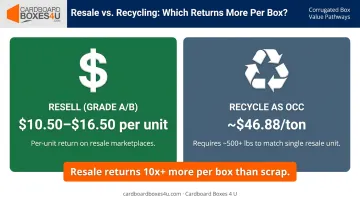
The economics here are stark. According to Verde Trader's marketplace data, used Gaylord boxes typically sell for $10.50–$16.50 per unit on resale markets. Compare that to OCC scrap pricing: NERC reported national OCC at $46.88/ton in January 2026 — meaning recycling a ton of corrugated nets you roughly what selling three or four good Gaylords would. Resale isn't just preferable; it's a completely different value category.
The Four Pathways
Reuse — The box stays in your operation for another cycle. Zero cost, maximum value. Criteria: firm walls, square corners, intact bottom flaps, completely dry with no odor. Cosmetic scuffs and relabeling marks are irrelevant to structural fitness.
Resell — The box passes structural inspection but is surplus to current needs or the wrong size. Grade A (clean, full flaps, no holes) and Grade B (minor tears, structural integrity intact) boxes are actively purchased by warehouses and manufacturers at a fraction of new-box cost.
Recycle — The box has failed structurally (crushed, delaminated, torn flaps) but is clean and dry. Flatten it and route to OCC baling. AF&PA reported a 2024 U.S. cardboard recycling rate of 69%–74%, so the infrastructure exists — but only clean, dry corrugated qualifies as ISRI Grade 11 OCC.
Dispose — Wax-coated, oil-soaked, food-contaminated, or water-saturated boxes are landfill material, not recycling. The Fibre Box Association is explicit: corrugated treated or coated with wax is not suitable for recycling and should not carry the Corrugated Recycles symbol.
Replacing Boxes After Removal
When boxes cycle out and replacements are needed, Cardboard Boxes 4 U stocks Gaylord and bulk cargo configurations across single-wall (200#/ECT-32), double-wall (275#/ECT-48), and triple-wall builds. Over 1,300 sizes are available, with custom manufacturing on a 7–14 business day lead time. The standard 48"×40"×36" bulk bin is pallet-compatible and carries volume pricing at higher quantities.
What to Prepare Before Starting Gaylord Box Removal
Equipment and Space Requirements
You don't need much equipment, but you do need the right setup before boxes start accumulating:
- Pallet jack or forklift — to move palletized stacks without manual lifting
- Banding tool and strapping — to secure stacked boxes before pickup
- Baler or designated baling area — for OCC-grade material
- Four clearly marked staging zones — reuse, resale, recycle, disposal. Label them visibly and enforce the separation
On stacking height: OSHA 29 CFR 1910.176(b) does not specify a universal numeric height limit for warehouse containers, but requires that stacked material be stable and secure against sliding or collapse. Keep stacks at a height where they won't shift, and maintain at least 18 inches of clearance below sprinkler deflectors per OSHA 29 CFR 1910.159(c)(10).
Documentation and Compliance Readiness
Before contacting any removal service, prepare a basic inventory log:
- Box count by category (reuse/resale/recycle/dispose)
- Grade estimate (A, B, or recycle)
- Box dimensions where known
Having this ready cuts quoting time considerably. If your operation handles chemicals, food, or other regulated materials, check whether any boxes require special disposal documentation. EPA generator rules require a hazardous-waste manifest for chemically contaminated corrugated that qualifies as hazardous waste — this is handled separately from standard OCC removal.
Quantity Thresholds and Timing
Most professional pickup services require minimum quantities before scheduling:
| Service | Minimum Quantity |
|---|---|
| Gaylord Box Exchange | 50 boxes |
| BulkCycle | 50–100 boxes |
Hit those minimums before scheduling — it's what makes the pickup economical for both sides. While you're accumulating, stage boxes in your designated zones as they're unloaded. Boxes left loose on the dock lose value fast: moisture exposure, forklift traffic, and stacking pressure all degrade structural condition quickly.
Common Mistakes During Gaylord Box Removal
Sorting too late: Once a structurally sound box is flattened into an OCC bale, its resale value is gone permanently. Inspection at the dock during unloading is the only cost-free intervention point — skip it and you've already lost money.
Contaminating the recycling stream: One wet or wax-coated box baled into clean OCC can get the entire load rejected or downgraded. Most mills trigger weight deductions when average moisture exceeds 13%, and they have no obligation to sort it out for you.
Skipping palletization and banding: Loose, unstacked boxes are harder to handle, more prone to in-transit damage, and may be refused or discounted by removal services. Palletized and banded stacks also reduce dock safety risks from shifting loads.
Failing to document before pickup: Without photos or a grade log, disputes over payment rates are difficult to resolve and recycling certificates can't be generated after the fact. Ten minutes of documentation upfront saves hours of disputes later.
Alternatives to Standard Gaylord Box Removal
Resale via marketplace or broker. Operations with consistent box output — inbound receiving, returns processing — can recover meaningful cash per unit through used packaging marketplaces or regional brokers, well above OCC scrap rates. Expect some coordination overhead and a minimum staging quantity before listing.
Donation or internal repurposing. Structurally sound boxes can go to local nonprofits, community organizations, agricultural operations, or other internal departments. No direct revenue, but disposal costs drop and boxes stay out of the waste stream. Skip this option for any box with chemical or food contamination.
Municipal OCC drop-off. Local recycling programs handle clean, dry corrugated at no cost — but most require boxes to be flattened and cut to posted size limits. NYC caps bundles at 18 inches tall; full-size Gaylord panels won't meet curbside restrictions without cutting first.
Frequently Asked Questions
How do I get rid of Gaylord boxes?
The four main pathways are: reuse in operations, resell to used-box buyers or brokers, flatten and recycle as OCC if clean and dry, or landfill if wet or contaminated. Sorting at the dock, before baling, preserves the most value by keeping resale-grade boxes identifiable and separable.
Can Gaylord boxes be recycled?
Clean, dry Gaylord boxes recycle as ISRI Grade 11 OCC — flatten them, remove poly liners and tape, and bale. Wax-coated, oil-soaked, food-contaminated, or water-saturated boxes cannot be recycled and must go to landfill or waste-to-energy instead.
Is it better to sell or recycle used Gaylord boxes?
Selling Grade A or B boxes returns significantly more value than recycling. OCC scrap pricing nets around $44–$47 per ton, while used Gaylords sell for $10.50–$16.50 per unit on resale marketplaces — a strong return whenever boxes are still structurally sound.
How should Gaylord boxes be stored before removal or pickup?
Stack upright on wooden pallets (25–50 per stack), band each stack, and store off the floor to prevent moisture damage. Keep stacks away from high-traffic forklift lanes and stack only to stable, secure heights that won't shift or collapse.
How many Gaylord boxes are typically required for a professional pickup service?
Most U.S. removal and used-box buying services require a minimum of 50–100 boxes to make pickup economically viable. Smaller loads may take 7–10 business days to schedule versus 2–7 business days for larger quantities.
What makes a Gaylord box no longer suitable for reuse?
Disqualifying conditions include delaminated or spongy walls, crushed or rounded corners, missing or torn bottom flaps, and any moisture, odor, or contamination. Cosmetic damage such as scuffs, ink stains, or relabeling marks does not affect structural fitness.